


As the energy system evolves, we are working to ensure that no one is left behind. Emerging home energy technologies—like smart thermostats, window heat pumps, battery storage, plug-in solar, and induction stoves (descriptions below)—can help households lower energy bills, improve resilience, and support a cleaner, more affordable electric grid.
That's why we are launching a new initiative to bring cost-saving, resilient energy technology to all households—regardless of income or housing type.
To accomplish that, we are focusing on two key strategies:
1. No-Cost Installations for Low-Income Affordable Housing
We are building partnerships and pursuing grants, donations, and other funding opportunities to provide distributed energy technologies at no cost to affordable housing tenants.
2. Group Buy Programs
By negotiating discounted pricing directly with distributors and installers, we aim to make technologies available at significantly lower costs than households could obtain on their own.

By filling out this survey, you will help us demonstrate the level of interest in the program to potential funders. We’ll also place your name on a non-binding waitlist for the technologies you select and update you as the program develops.
Technology Explainers
Read the descriptions below to learn more about smart thermostats, window heat pumps, battery storage, plug-in solar, and induction stoves.
Smart Thermostats
A smart thermostat is a Wi-Fi-enabled device that allows you to control your home’s central heating and cooling system from anywhere, even when you are not at home. Similar to a programmable thermostat, it allows you to set heating and cooling schedules with different temperatures at different times of day. Smart thermostats go a step further by using sensors to track your usage patterns and learn your routine and temperature preferences over time.
By automatically adjusting when your heating and air conditioning run, smart thermostats can help lower your energy bills and avoid unnecessary energy use when you’re asleep or away from home. For example, a smart thermostat is able to detect when your home is not occupied and pause heating or cooling, then resume comfort setting when you return. Plus, most smart thermostats have companion apps so that you can adjust your thermostat remotely from your smartphone or computer—meaning you can monitor your thermostat from anywhere!

Window Heat Pumps
Window heat pumps (WHPs) are similar to window AC units in shape and size, but they use less energy and provide reliable year-round heating and cooling. Since window heat pumps plug into a standard 120V outlet, they do not necessarily require any electrical upgrades or professional installation (although this is generally recommended). Window heat pumps are up to 4x more efficient than traditional electric heating systems, allowing many renters and homeowners to save money on their winter heating bills while having more control over the temperature of their home. They also provide efficient, reliable, and quiet air conditioning and filtration.

Battery Storage
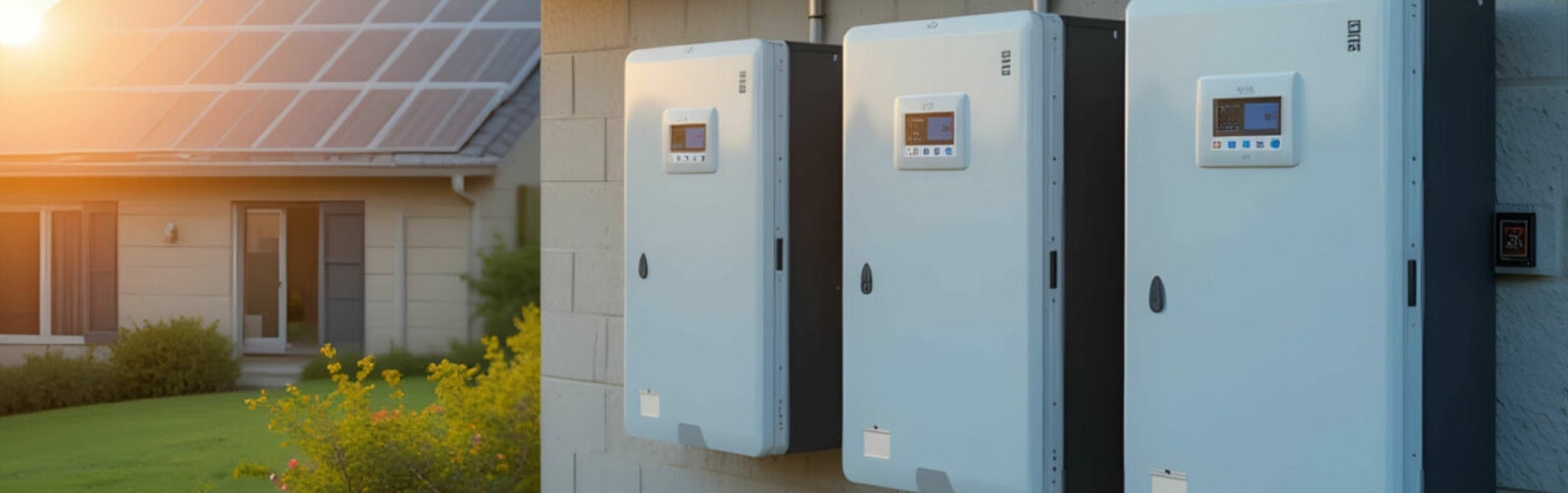
A battery energy storage system (BESS) stores electricity during the times of the day when there is excess or cheaper electricity available. The stored electricity can then be used at a later time, such as when there is a power outage or when the price of electricity is much higher. Battery storage systems can also store excess electricity generated by solar panels and other distributed energy resources (DERs). Battery storage systems in the home are most commonly located in spaces like the garage, basement, or utility room. Typical home battery systems have a range between 5-20 kWh and can power essential appliances in a home for about 24 hours. The most common kind of home battery system type is lithium-ion, and these batteries typically have a life span of 10-15 years or 6,000 cycles.
Plug-in Solar
Plug-in solar, also known as balcony solar, is a plug-in solar system that can be placed in a backyard or balcony. The plug-in solar system, unlike a standard rooftop solar system, does not have to be installed by a contractor, and can be plugged into a standard 120V outlet. These systems tend to also be smaller in size: a plug-in solar system tends to be 0.8 to 1.6 kilowatts (kW), while a standard rooftop solar system can be about 7 to 15 kW. The energy generated by the solar system goes back into the household wiring, reducing the amount of electricity the household needs to draw from the grid. Due to the small size of the system, plug-in solar would ideally not be connected to the main grid, meaning it wouldn’t require an interconnection agreement and couldn’t participate in net metering. Overall, plug-in solar is a more affordable option for those who would like to adopt solar and save money but don’t have the means or opportunity to install a full rooftop system.
.jpg?width=1000&height=322&name=plug-in%20solar%20panels%20(Bright%20Saver).jpg)
Induction Stoves
An induction stove is a type of electric stove that uses electromagnetic energy to heat cookware directly. When an induction stove is turned on, there is a flow of electricity that is sent through copper coils underneath the stove's surface. This flow of electricity creates a magnetic field above the stove surface, which heats the cookware that stands on top of the stove. Since the cookware is being directly heated by the induction stovetop as opposed to a regular gas or electric stove, this results in much faster cook times and efficient energy use. An induction stovetop can precisely control the surface temperature as well as reduce risk of burns, since the surface remains cool to the touch even when it’s on. Only certain types of cookware that have a magnetic base are compatible with induction stovetop use, such as cast iron or stainless steel.

Comments