

Massachusetts created the Alternative Energy Portfolio Standard (APS) back in 2008 to subsidize several technologies and actions, which, in theory, are supposed to help the Commonwealth reduce its greenhouse gas emissions. One might think of it as a strange cousin of the more sensible Renewable Portfolio Standard, which drives wind and solar development. In practice, the APS likely makes little to no impact on the state’s emissions because most of its subsidies go to natural gas-burning combined heat and power systems and biofuels, both technologies with negative to unclear impacts on emissions.
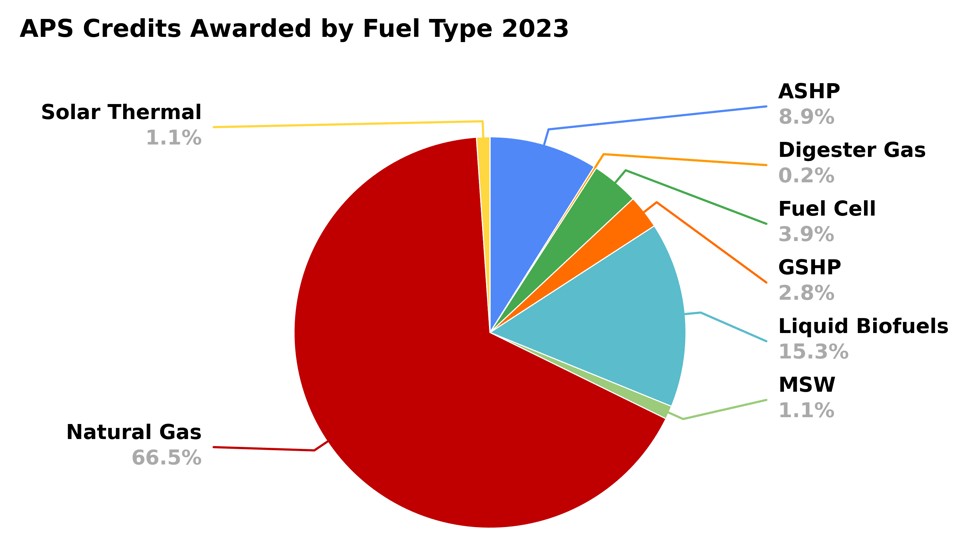
In addition to its subsidizing fossil fuels, the program also increases electric rates. This is because the program works by awarding APS credits to businesses or people doing a qualifying action, like adding biodiesel into heating oil. These credits have value because electricity sellers (utilities, municipal aggregation programs, third-party suppliers) are required to buy a certain number of credits every year. Electricity sellers then pass the cost of the APS on to their customers.
The Accidental Price Spike
The fact that the APS both increases electric bills and mostly supports fossil fuel-burning equipment led the Governor to include provisions ending the program as part of her energy affordability bill. Unfortunately, when both the House and Senate went to advance their own energy affordability bills, both chambers decided to shrink, rather than eliminate, the program. These decisions quickly led to unintended side effects.
To understand why, it’s important to know that APS credits can be bought and sold like barrels of oil or sacks of potatoes. That means APS credit prices are set by supply and demand. When there are a lot of APS credits offered for sale relative to the number of credits electricity sellers need to buy, the price falls, and when there is a shortage, or the expectation that there will be a shortage in the future, credit prices rise.
Both the Senate and House energy bills (which are currently in conference committee) would decrease the number of ways businesses could earn APS credits in the future. This means they would reduce the future supply of APS credits.
However, neither bill proposes taking corresponding action to lower the demand for APS credits. As a result, even before these new rules have been passed into law, the expectation that they will go into effect has caused APS credit prices to skyrocket, since market participants came to expect that there would be a shortage of credits in the future. Since electricity sellers are required to have a certain number of credits, these higher credit prices lead to higher electricity bills for ratepayers.
According to filings by National Grid in dockets related to its Basic Service rates, the cost of an APS credit increased by 599% between September 2025 and August 2026. If National Grid’s costs are representative of the compliance costs of the other electricity sellers, this increase pushes the program’s annual cost to electric ratepayers from $9.4 million to over $68 million over that same period.
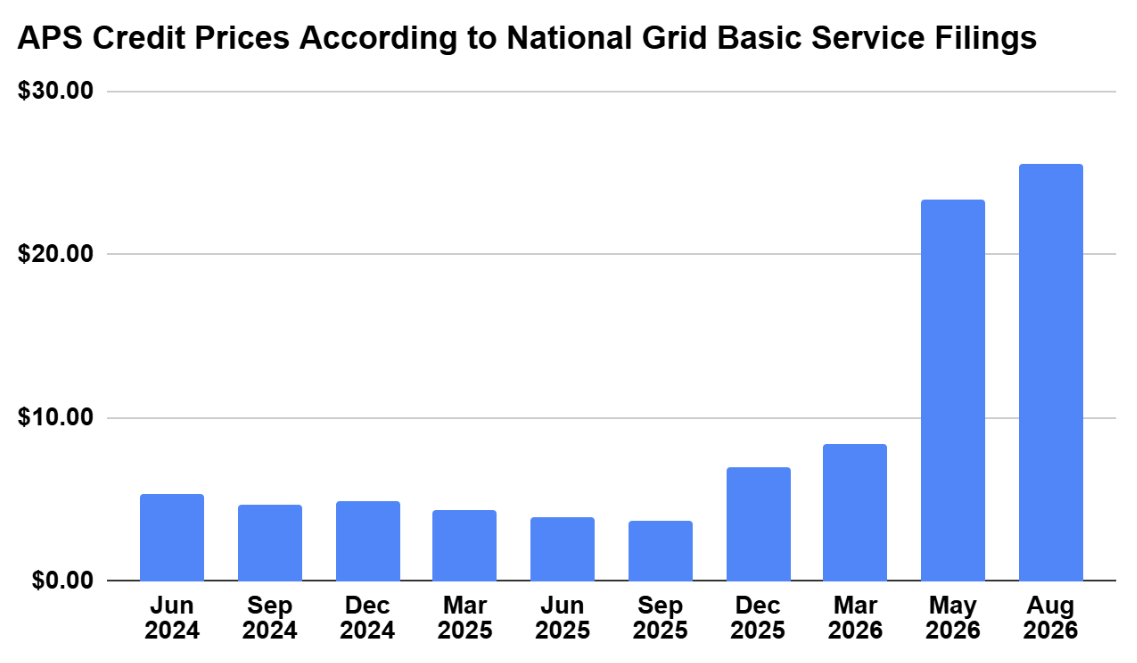
Rather than reducing bills, the legislature’s attempts to shrink the program have paradoxically made it more expensive, even before any legislation has the chance to become law. The APS credit price spike also helps explain why the Executive Branch is now proposing to change the program’s regulation.
Proposed Changes
While the APS was created by the legislature and only they can eliminate it, how the program operates is largely determined by regulations created by the Department of Energy Resources (DOER). Recently, DOER has decided to use this power to propose new regulations that would dramatically change how the program works and its cost to ratepayers.
The proposal’s biggest change is to place a time limit on how long certain units (everything besides heat pumps and solar thermal systems) can receive support through the program. Under these changes, the owner of a combined heat and power unit that's been receiving subsidies since 2017 or earlier would no longer receive subsidies starting on January 1, 2027. A combined heat and power unit that started getting support in 2019 would see its support end in 2029. This change would shrink the number of people and businesses who would qualify to earn APS credits and phase out much of its support for fossil fuel-burning units.
.jpg?width=2240&height=848&name=Electricity%20bill%20(stock%20image%20for%20blog).jpg)
In addition to shrinking APS credit supply, the proposal would also shrink APS credit demand by cutting the number of APS credits electricity sellers need to buy per year by roughly 70%. This would not only lower the number of credits that electricity sellers need to buy but also lower the price of those credits.
While the APS would still be an overly complicated and flawed program after these proposed changes, what DOER has put forward is likely the best that can be done absent legislative action.
What happens next?
If you want to fight to end subsidies for fossil-burning combined heat and power systems, DOER will be holding an online public hearing at 10:00 AM on November 13, 2026, and will also be accepting written comments until then. You can find out more here. Special interest groups that make money from the APS will be out in force, and it’s important to make sure they are not the only ones DOER is hearing from. We are confident that DOER will finalize the proposed regulations, but it is by no means certain.
The legislature still matters!
As noted above, there are some aspects of the program that can only be changed through legislative action. For instance, only a change in the state’s laws can block new combined heat and power units from joining the program. That is why, even if DOER’s proposal goes into force, Green Energy Consumers Alliance will continue to advocate for them to pass APS reform or repeal as part of the energy affordability bill.
Comments